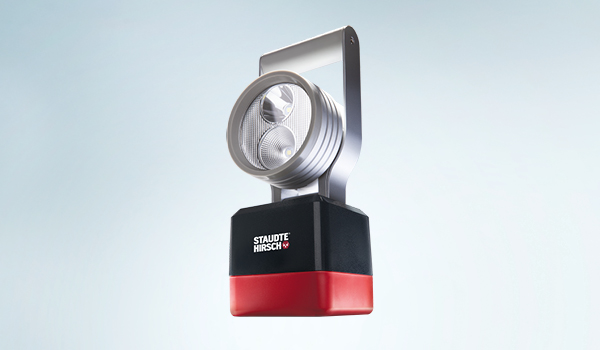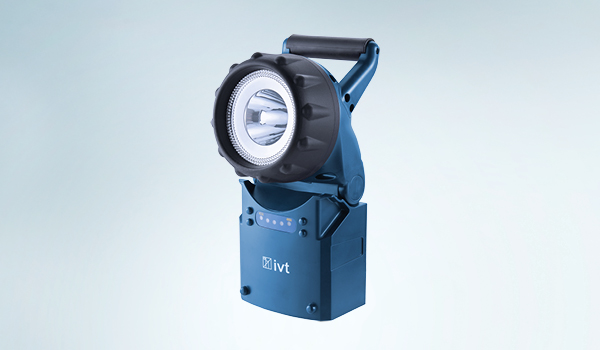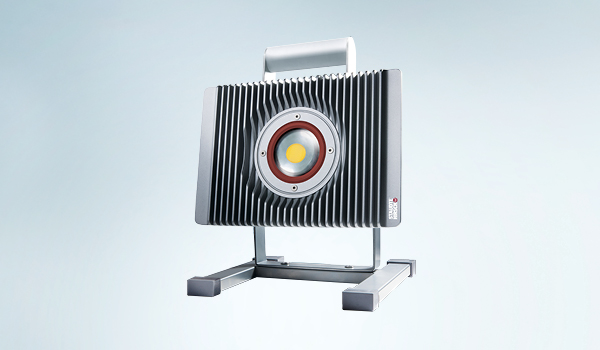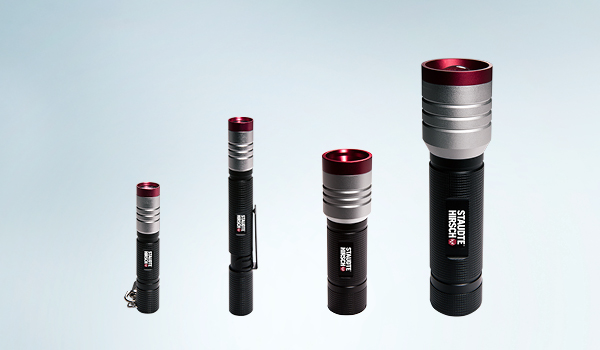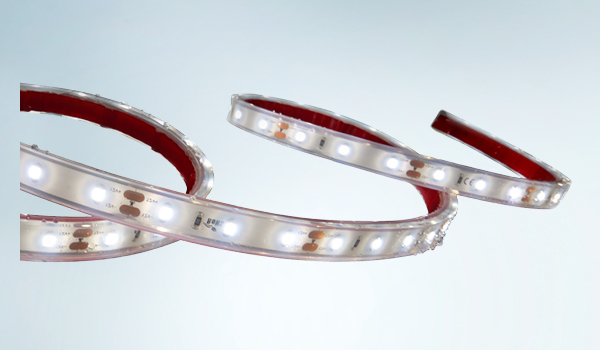

Since 1996, IVT has been developing rechargeable work lights and hand lamps. We are driven by a passion for technology and the desire to develop innovative products at an extremely fair price-performance ratio.
The engineers at IVT have therefore set themselves the goal of developing products under the professional brand STAUDTE HIRSCH that set new standards in their category. Discover the unique combination of over 25 years of engineering expertise paired with the use of the latest technologies. Discover our high-quality lamps from IVT and Staudte Hirsch:
FAQ | Useful informations

| Light color | Color temperature in Kelvin |
| Warm white | Below 3300 K |
| Neutral white | 3300 K to 5000 K |
| Daylight white/cold white | Above 5000 K |
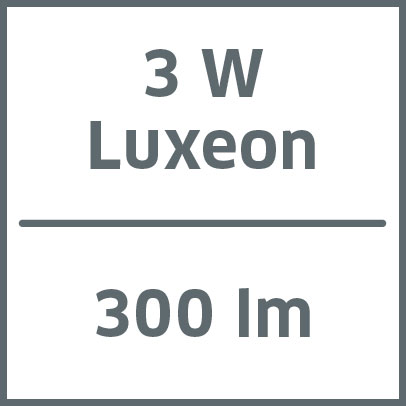 |
Light source Maximum power consumption (e.g. 3 W) as well as the manufacturer (Luxeon) and/or type of the used light source | Maximum luminous flux in lumen (e.g. 300 lm) |
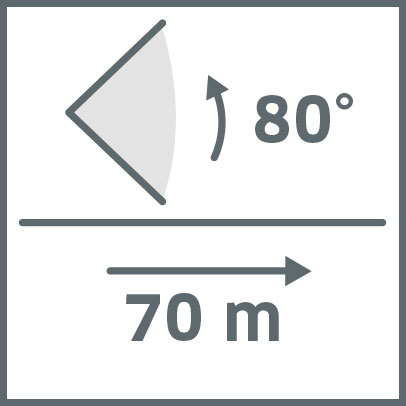 |
Beam angle and lighting range The opening angle in which the light is radiated. (e.g. 80°) | Maximum lighting distance in the strongest lighting mode (e.g. 70 m) |
 |
Runtime Maximum runtime (e.g. 4 h) in the selected performance level (e.g. 100 %) |
 |
Flashing function Maximum runtime in the selected flashing function (e.g. 35 h) |
 |
Battery type Details about the used energy source (e.g. Li-Ion) with notice regarding the ability to be recharged. |
 |
Focusable light max. light range (e.g. 200 m) |
 |
Emergency light function In the case of power outage the lamp turns on automatically, turning into a safe emergency light. |
 |
Magnetic The light is attached using magnets |
 |
Clip Version The light is attached using clips |
 |
Light with earthing contact plug Cable length 5 m |
 |
Connection cable with open ends 1 m connection cable with open ends |
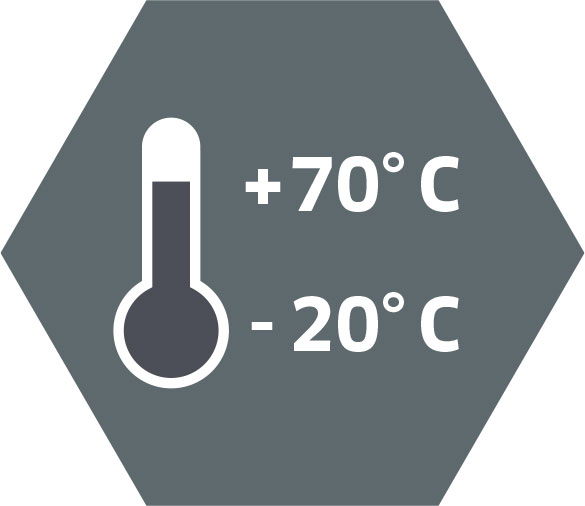 |
Operating temperature Suitable for operation at temperatures (e.g. +70 °C to -20 °C) |
 |
IP protection type Defines the suitability of electrical equipment for the various environmental conditions (e.g. housing protected against dust, rain and water jets) |
 |
Explosion protection This product is suitable for use in environment with risk of explosion |
 |
Touch switch The lamp is switched on /off by touching |
 |
Wall mounted The lamp is suitable for wall installation |
 |
Ceiling mounted The lamp is suitable for ceiling installation |
 |
CE symbol This symbol confirms the fulfilment of elementary requirements regarding the applying EU regulations |
 |
Mobile application Suitable for use in the most various vehicles (e.g. private car) |
 |
Stationary application Suitable for us in buildings with autarchic 12 V/24 V power supply (e.g. solar or wind power) |
Key figure 1:
|
Key figure 2:
|
| 0 No protection | 0 No protection |
| 1 Protection against solid foreign objects with diameter > 50 mm | 1 Protection against vertically falling drops of water |
| 2 Protection against solid foreign objects with diameter > 12.5 mm | 2 Protection against inclined (up to 15°) falling drops of water |
| 3 Protection against solid foreign objects with diameter > 2.5 mm | 3 Protection against falling sprays of water |
| 4 Protection against solid foreign objects with diameter > 1 mm | 4 Protection against splash water |
| 5 Dust-protected | 5 Protection against jets of water (nozzle) |
| 6 Dustproof | 6 Protection against strong jets of water |
| 7 Protection against the effect of temporary immersion under water | |
| 8 Protection against permanent immersion under water |
 |
 |
Widespread collapse of the power gridA blackout is defined as a widespread collapse of the European transmission grid, something that has not happened since the Second World War. It could theoretically occur if the European transmission grid is confronted with several major disruptions at the same time - for example, due to a massive storm event that causes major damage to the grid. However, experts consider these large-scale power outages to be highly unlikely. What could theoretically become necessary, however, is a so-called brownout. |
Controlled shutdown of the electricity gridBrownout - or controlled load disconnection - refers to the targeted disconnection of individual regions and areas in order to save electricity and thus keep the grid stable. This has not happened in Germany since the Second World War and is considered a last resort by electricity grid operators when electricity demand can no longer be fully covered. Due to the tense situation on the electricity market, the problems of the nuclear power plants in France and the uncertainty of natural gas supplies, such brownouts have become somewhat more likely, but according to the grid operators, the risk is still rather low. |
| Type | 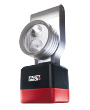 Staudte Hirsch SH-5.100 |
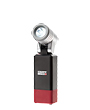 Staudte Hirsch SH-5.300 |
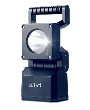 IVT PL-828 |
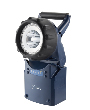 IVT PL-850 |
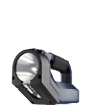 IVT PL-830 |
| Light sources | 2 x 8 W LEDs | 3 W LED | 5 W LED | 3 W LED | 3 W LED | 0.8 W SMD LED |
| Luminous flux | 1040 lm | 225 lm | 350 lm | 240 lm | 240 lm | 40 lm SDM LED |
| Current supply | Li-Ion Akku 7.4 V | 8000 mAh |
Li-Ion Akku 7.4 V | 2200 mAh |
Li-Ion Akku 7.4 V | 4400 mAh |
Blei Akku 6.0 V | 4500 mAh |
Li-Ion Akku 7.4 V | 2200 mAh |
| Lighting modes | 5 | 2 | 3 | 4 | 5 |
| Operation time (Brightness/Mode) |
6 h (100 %) 11 h (50 %) 16 h (Flashing mode) |
4.5 h (100 %) 9.0 h (50 %) |
4 h (100 %) 8 h (50 %) 16 h (Flashing mode) |
20 h (100 %) 25 h (70 %) 30 h (30 %) 35 h (Flashing mode) |
5 h (100 %) 8 h (50 %) 18 h (Flashing mode) 35 h (SMD LED) 4.5 h (100 % + SMD) |
|
|
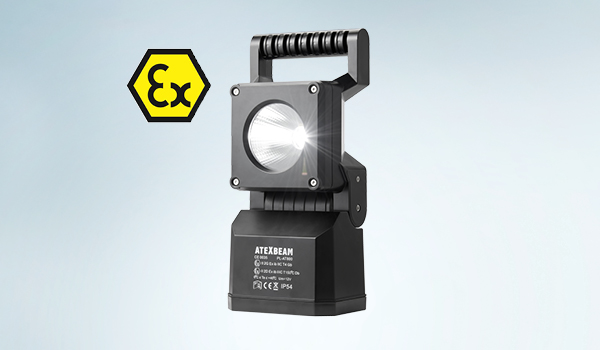
Can be used as emergency lighting outside explosive environmentsEx-protected LED work lamp ATEXBEAM PL-AT800, 3 W, Li-Ion battery |
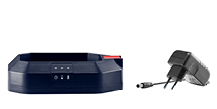 |
Step 1 Connect the charging cradle or charging/wall bracket to the power supply unit and the power supply unit to the power supply. |
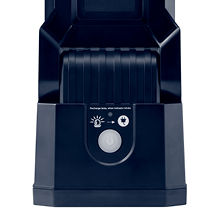 |
Step 2 Switch the light on. For the SH-5.100, SH-5.300 and PL-850 models, you can select the mode. |
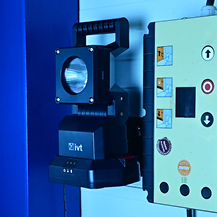 |
Step 3 Place the light in the charging cradle. The light goes out. |
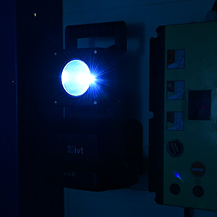 |
Step 4 Simulate a power failure by unplugging the mains adapter from the socket – the light switches on automatically in the selected mode or at the brightest brightness level. |
| Type | Product description |
|
Staudte Hirsch SH-5.100 Light sources: 2 x 8 W LED Luminous flux: 1040 lm Current supply: Li-Ion 7.4 V | 8 Ah Lighting modes: 5 Operation time: 6 h (100 %) |
|
Staudte Hirsch SH-5.300 Light sources: 3 W LED Luminous flux: 1225 lm Current supply: Li-Ion 7.4 V | 2.2 Ah Lighting modes: 2 Operation time: 4.5 h (100 %) |
|
IVT PL-828 Light sources: 5 W LED Luminous flux: 350 lm Current supply: Li-Ion 7.4 V | 4.4 Ah Lighting modes: 3 Operation time: 4 h (100 %) |
|
IVT PL-850 Light sources: 3 W LED Luminous flux: 240 lm Current supply: Blei 6 V | 4.5 Ah Lighting modes: 4 Operation time: 20 h (100 %) |
|
IVT PL-830 Light sources: 3 W LED | 0,8 W SMD LED Luminous flux: 240 lm | 40 lm SMD LED Current supply: Li-Ion 7.4 V | 1.6 Ah Lighting modes: 5 Operation time: 5 h (100 %) |
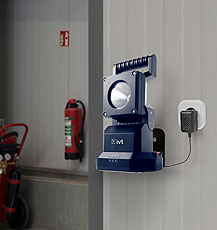
Ex-protected LED work lamp ATEXBEAM PL-AT800, 3 W, Li-Ion battery
The emergency lighting function is integrated into the Ex light as standard.
Outside the hazardous area, the Ex-certified PL-AT800 LED work light can also be used as emergency lighting.
Item no. 312218
To the product >
|
Step 1 Connect the charging cradle or charging/wall bracket to the power supply unit and the power supply unit to the power supply. |
|
Step 2 Switch the light on. For the SH-5.100, SH-5.300 and PL-850 models, you can select the mode. |
|
Step 3 Place the light in the charging cradle. The light goes out. |
|
Step 4 Simulate a power failure by unplugging the mains adapter from the socket – the light switches on automatically in the selected mode or at the brightest brightness level. |
ATEX is an abbreviation for the French term Atmosphères Explosiblesandaims to protect humans, the environment and machinery from explosions. ATEX directives apply to all devices, machines and protective systems that are used in potentially explosive atmospheres.
For example, the chemical industry, which works with gases or flammable liquids, the metal industry and the construction industry, as well as refineries that work with crude oil or biogases.
In agriculture and the wood industry, highly flammable dust mixtures are produced that could potentially lead to explosions. Only lamps with ATEX approval may be used in this environment.
| EX | Meaning of the labelling according to the ATEX directive |
| II | ATEX device group The ATEX explosion groups define the authorised place of use. I = Use in mining and underground workings II = Use in all other areas, e.g. chemical plants, pharmaceuticals, oil rigs, refineries, etc. |
| 2 | ATEX device category (application in respective Ex-zone) The devices are classified according to the conformity assessment procedure into device categories 1 to 3. 1 = No ignition sources are present in the event of rare and unexpected malfunctions 2 = No ignition sources are present in the event of malfunctions to be expected during normal operation 3 = No ignition sources are present during normal operation |
| G/D/M | Explosive atmosphere The device groups and categories are supplemented by a letter for the potentially explosive atmosphere: G = gas, vapour, mist, D = dust, M = methane, coal dust 1G | Risk: constant, frequent or long-term 1G, 2G | Risk: occasional 1G, 2G, 3G | Risk: rare or short-term 1D | Risk: constant, frequent or long-term 1D, 2D | Risk: occasional 1D, 2D, 3D | Risk: rare or short-term M1, M2 | Risk: mining |
| Ex | Explosion protected operation material |
| ib | Ignition protection type |
| II C | Explosion group for gases and vapours The classification in explosion groups considers the probability of the presence of an explosive atmosphere and the simultaneous occurrence of a defect on the device which could lead to ignition. The hazard increases from A to C. A: very high level of safety B: high level of safety C: normal level of safety |
| T4 | Temperature class The classification into temperature classed considers the ignition points of the gases/dusts and indicates the maximum allowed surface temperature of the device. The hazard increases from T1 to T6. T1: 450 °C T2: 300 °C T3: 200 °C T4: 135 °C T5: 100 °C T6: 85 °C |
| device category | 1 | 2 | 3 |
| G (Gas, vapour, mist) | 0 | 1 | 2 |
| D (Dust) | 20 | 21 | 22 |
| Frequency | constantly, long-term, frequently | occasionally | rarely or only for a short period |

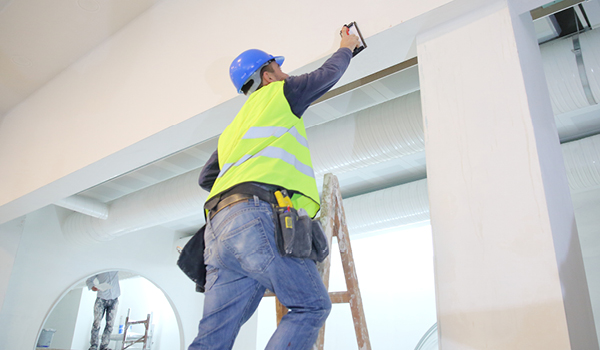
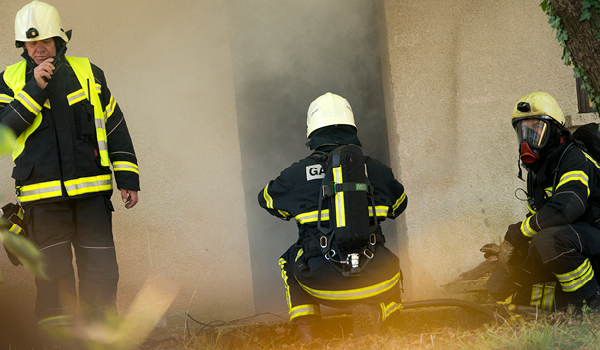
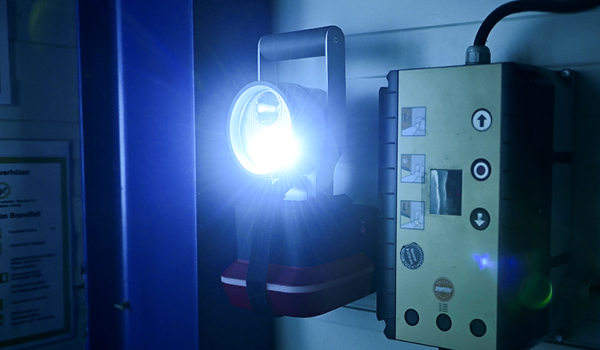
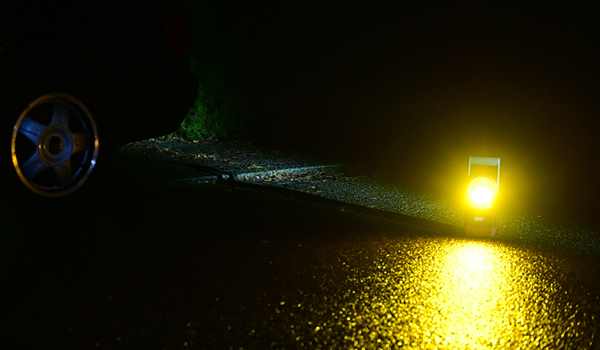
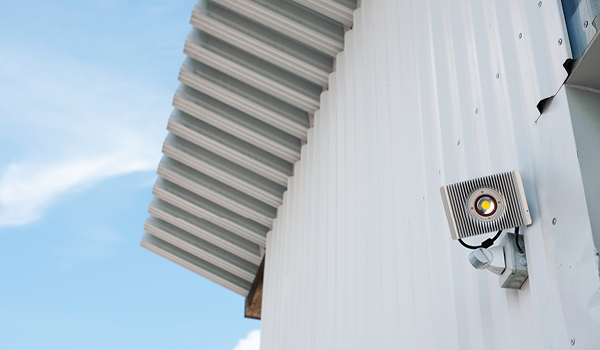
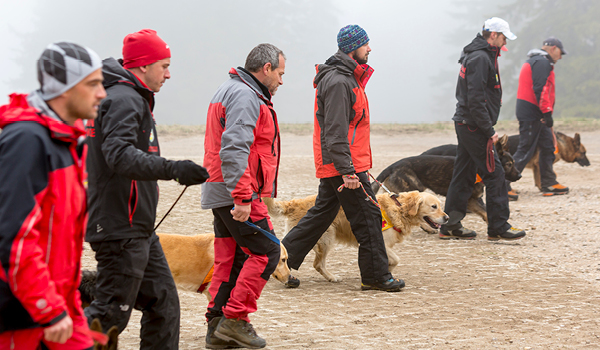
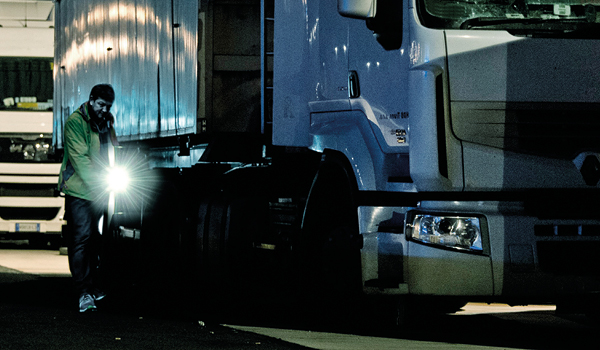
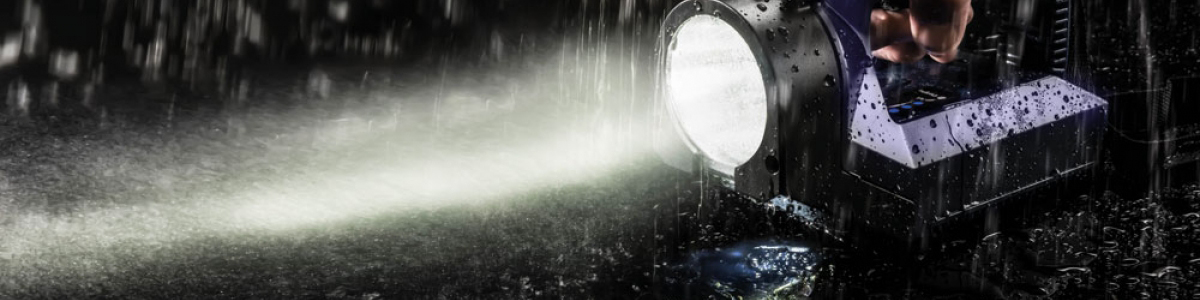
Even in adverse weather conditions, guard and security services need to keep an eye on things and search and rescue dog teams need to look for missing people or objects.
They need easy to carry, robust, waterproof hand lamps or torches with the longest possible operating time.